How Can You Get Better at Basketball If You keep getting Injured?
If you’ve ever typed “how can I get better at basketball” into Google, you’re not alone.
It’s one of the most searched basketball questions out there — and for good reason.
Everyone wants to improve:
better handles
better shooting
more athleticism
more confidence on the court
But here’s the hard truth most players don’t want to hear:
You can’t get better at basketball if your body can’t stay on the court.
And injuries are one of the biggest — and most overlooked — reasons players stall, regress, or quit altogether.
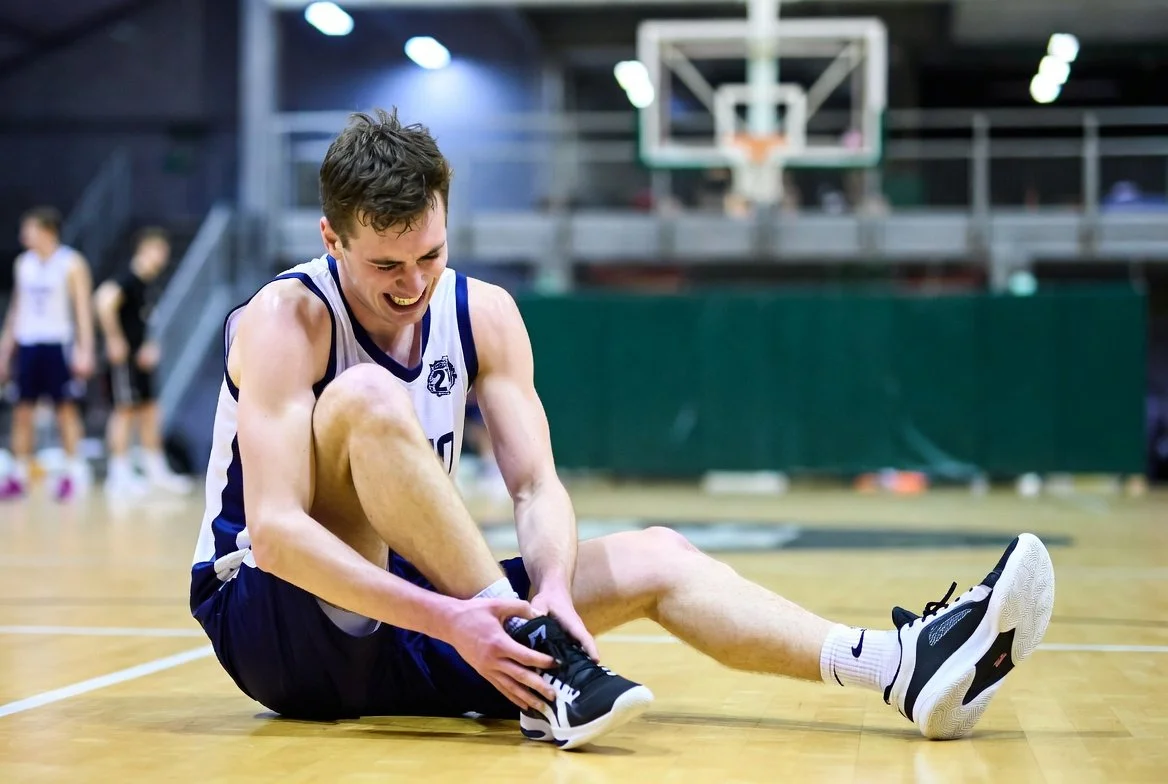
Even minor ankle injuries can quietly limit progress and keep players from getting better at basketball.
The Injury Problem Most Players Underestimate
Many basketball players take their health for granted. But injuries happen in basketball - and at a pretty high rate.
Basketball players get injured as much as athletes in almost any other sport, except football.
At the high school level:
A typical 12-player team averages 8–9 injuries per season (that are actually reported)
On a 12-man high school roster, 2 players will miss games due to injury per season
And those numbers are conservative. Especially that first statistic.
Most players never tell their coaches or athletic training staff about their nagging aches and pains that they play through:
foot pain
back tightness
knee pain
ankle discomfort
They just “play through it” — until they can’t.
Mobility restrictions, joint stability deficits, and poor movement quality often start in elementary school and middle school. Most of these issues don’t start in high school, but they may not show up until then.
So when players ask how can I get better at basketball, they’re often missing the biggest limiter: availability.
College Basketball: The Injury Reality Gets Worse
As competition increases, so does injury risk.
College basketball injury data shows:
Injury rates are ~3× higher than high school
Games alone account for 9–10 injuries per 1,000 athlete exposures
More games.
More travel.
More lifting.
More practices.
Less recovery.
This is why availability is a skill — and why NCAA coaches consistently value players they can rely on to stay healthy.
You can’t earn minutes, develop confidence, or sharpen your skills if you’re constantly rehabbing or managing pain.
Recreational Players Aren’t Exempt Either
This isn’t just a youth or college problem.
Recreational basketball is one of the most common reasons adult men end up in an orthopedist’s office or the ER.
For rec players:
Ankle injuries and knee injuries lead the list
Athlete exposure data shows that injury rates are surprisingly similar to organized high school basketball
Weekend warriors, men’s league players, pickup regulars — they all ask how can I get better at basketball too.
But improving at 25, 35, or 45 requires the same foundation: a body that can tolerate the demands of game.

Recreational basketball injuries are a common reason adult players end up in an orthopedist’s office.
Why Injuries Stop Improvement (Even When You’re Still Playing)
Here’s the sneaky part.
You don’t need to be “out” to be limited.
Minor injuries and physical limitations change:
how you jump
how you land
how you cut
how much you move on the court
how confident you feel when you are moving
That rolled ankle from last season?
That knee that gets stiff after games?
Those things quietly cap your development if they are not throughly addressed.
So even if you’re practicing, lifting, and playing; but your joint health and movement patterns aren’t improving — you may not actually be getting better at basketball at the rate you think you should be.
The Question You Should Be Asking Instead
Instead of only asking:
“How can I get better at basketball?”
The smarter question is:
“How do I build a body that lets me keep getting better?”
That means:
reducing injury risk
improving movement quality
building tissue capacity
managing workload and recovery
Skill work matters a lot — but durability is what allows skill to compound. Prioritize your long-term development.
Want a Simple Starting Point?
I put together a free guide that breaks this down in a practical, no-fluff way:
👉 5 Simple Habits Every Basketball Player Should Build to Stay Injury-Free
It’s not a workout plan. It’s not rehab jargon. It’s not complex.
It’s a framework to help you:
stay on the court more consistently
train smarter, not just harder
actually support your long-term improvement
[Download the free guide here]
Final Thought
If you’re serious about how you can get better at basketball, injury prevention work isn’t optional.
It’s not something you only do if you have time. It’s the foundation everything else is built on.
Because in the long-run, the players who improve the most aren’t always the most talented or even those who put in the most time.
They’re the ones who can keep playing.