Basketball Injury Prevention: 6 Physical Signs Parents Should Watch For
Basketball is an incredible sport for kids and teenagers. It builds confidence, work ethic, and lifelong friendships.
But it’s also physically demanding — far more than many parents realize.
Jumping, sprinting, cutting, landing, stopping on a dime, and absorbing contact all happen repeatedly, often while players are tired and reacting to unpredictable situations. Because of that, basketball injuries are common, even in young athletes.
The good news?
Many injury risks are visible before an injury ever happens.
This article will walk you through six physical signs that may indicate your child is at a higher risk for injury — and, more importantly, what those signs actually mean.
These signs do not mean your child will get injured soon or that they will even get injured playing basketball (although research shows that it’s highly likely that all players who play through high school will have an injury to get degree at some point).
They highlight areas where the body may not be fully prepared yet — and that’s fixable.
Why Basketball Injury Prevention Starts With the Body
When injuries happen, parents often hear things like:
“It was just bad luck”
“That’s basketball”
“They landed wrong”
Being in the wrong place at the wrong time is a factor in some injuries, but in reality, injuries are usually the result of mismatch:
The demands of the game exceed what the body can safely handle
Basketball injury prevention isn’t about bubble-wrapping kids — it’s about making sure their bodies are prepared for what basketball asks of them.
Parents, here are six physical signs that your son or daughter may not be optimally prepared for the demands of the sport:
1️⃣ “Heavy Feet” When Running or Landing
What parents May notice
Feet slapping the ground or “stomping”. Especially when your child is fatigued.
Loud landings after jumps.
Stiff, awkward stops.
Little control when changing direction.
What this usually means
Limited lower-body (especially lower leg) strength
Poor force absorption
Underdeveloped coordination and reactivity
Why this matters for basketball injury prevention
Basketball involves hundreds of jumps and hard decelerations each week.
If a player can’t absorb force smoothly, that stress has to go somewhere — often the ankles, knees, hips, or low back.
Quiet, controlled movement is usually a sign of better physical readiness.
2️⃣ Poor Squat or Hip-Hinge Mechanics
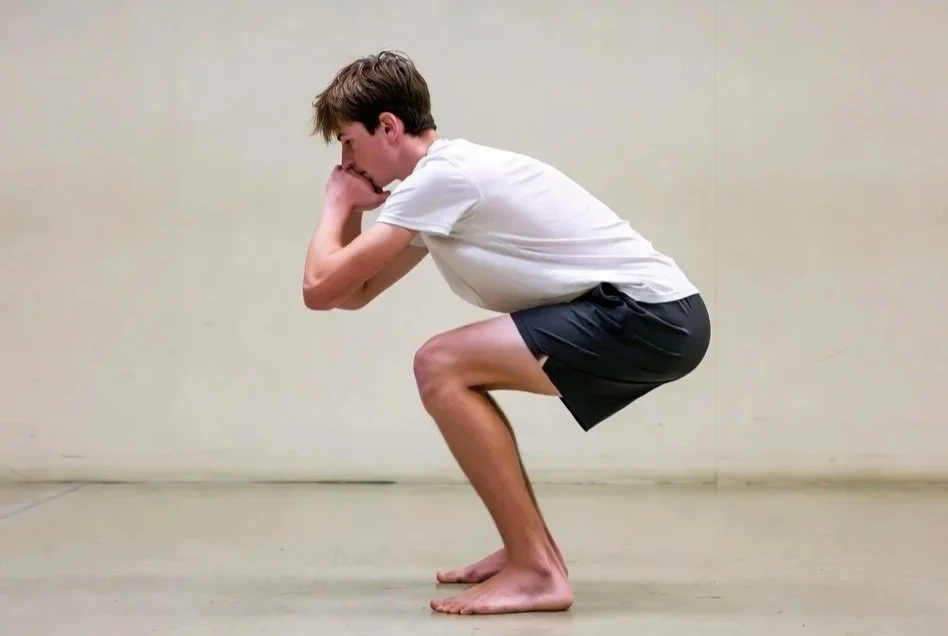
A youth basketball player performing a bodyweight squat to evaluate lower-body control, balance, and movement quality—key factors in basketball injury prevention.
What parents might see
Knees collapsing inward
Rounding through the middle or lower back
Knees going way passed the toes
Heels or toes coming off the ground during the movement
Awkward posture in defensive stance or struggles to get down in an athletic position
What this often points to
Poor core control
Weak or poorly coordinated hip muscles
Lower body and upper body not working together
Restricted ankle mobility
Why this matters
Squatting and hinging patterns show up everywhere in basketball:
Jumping and landing
Defensive slides
Cutting and stopping
Squatting and hinging are also major patterns to help athletes get stronger and more athletic in the weight room
If these patterns are inefficient, the same compensations appear on the court, especially when players get tired.
3️⃣ Difficulty Performing Basic Push-Ups or Holding a Neutral Plank
This one surprises a lot of parents.
Important clarification: this is not about being strong or muscular.
What parents might notice
Sagging hips or arched lower back
Hips are hiked up in the air, higher than the shoulders
Shaky shoulders/arms early in the exercise
Neck craning forward
Loss of form within seconds
What this usually indicates
Poor trunk (core) and pelvis stability
Weak connection between upper and lower body
Limited ability to transfer force through the body
Why this affects injury risk
Basketball is a full-body sport. Shooting, defending, absorbing contact, cutting, and landing all rely on the trunk to stabilize and transfer force.
When the middle is unstable, stress gets pushed into the joints.
4️⃣ Poor Balance — Especially With Contact
What parents may see
Wobbling on one leg
Trouble staying upright when bumped
Extra steps when stopping or landing
What this often means
Limited body awareness (proprioception)
Poor joint stability
Strength not keeping up with body size
Why this matters in basketball
Basketball is chaotic. Players rarely move in perfect, controlled positions. Balance must be maintained while reacting, reaching, landing awkwardly, or absorbing contact.
Poor balance increases injury risk during unexpected moments — which happen constantly in games.
5️⃣ Falling Down Frequently During Games
This is a big one — and often misunderstood.
A key distinction for parents
Getting knocked down sometimes is normal.
Ending up on the ground often is a red flag.
What frequent falling may suggest
Poor body control
Weak deceleration strength
Limited ability to absorb contact (trunk and pelvis stability)
Delayed reactions
Why this increases injury risk
This is two fold.
The factors that lead to being on the ground often during basketball (listed directly above) raise injury risk themselves. But then there’s also the fact that you hitting the ground a number of times each practice and game.
Frequent uncontrolled falls raise the risk of:
Wrist and hand injuries
Ankle sprains
Knee collisions
Hip and tailbone injuries
Concussions
Occasional falls are basketball. Constant falls means you are asking for injury.
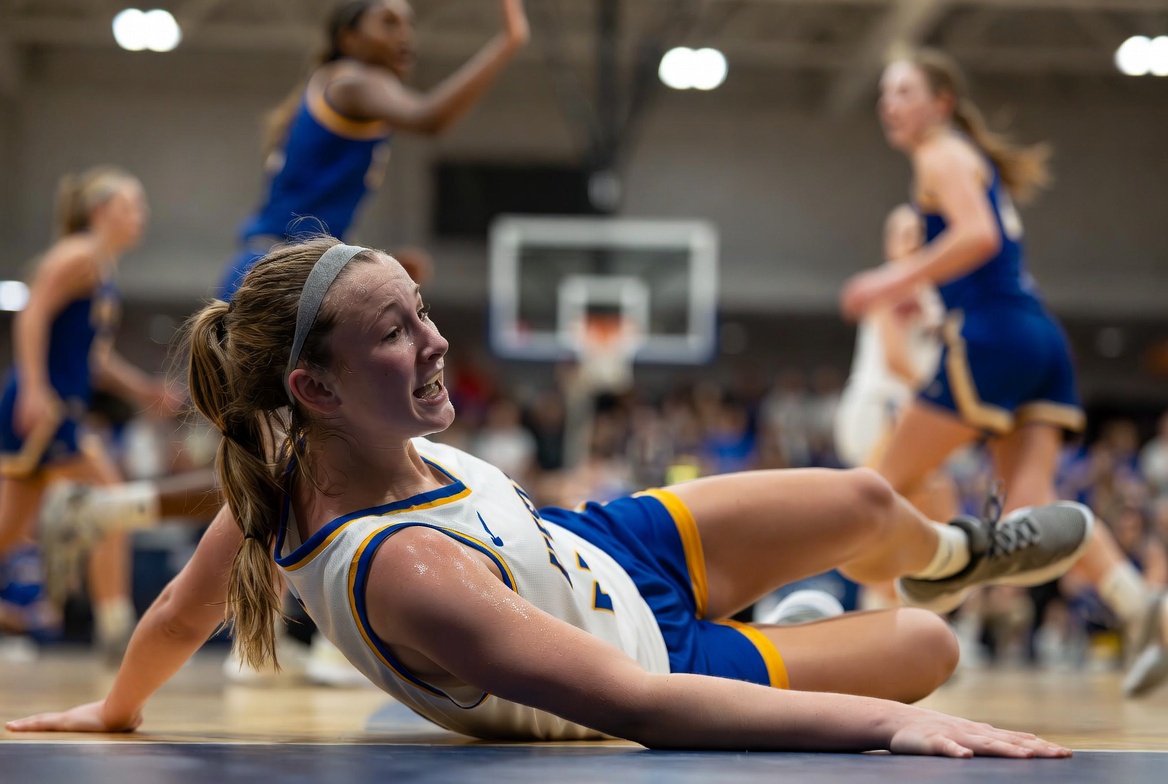
A youth female basketball player on the floor after contact during a game, illustrating how frequent falls can signal reduced balance, body control, or physical readiness in basketball.
6️⃣ Chronic Aches and Tightness
Common things parents hear
“My knees always hurt”
“My ankles and calves are always tight”
“My hips are sore”
What this often signals
Tissues aren’t tolerating the workload well
Recovery isn’t keeping up with demand
There are movement and strength compensations in the body
Pain and tightness don’t always mean injury — but they are warning signs that the body is not handling the demands of the sport optimally.
What Parents Should Take Away
If you noticed one or more of these signs, don’t panic.
These traits don’t mean your child is fragile or broken. They simply mean: The body may not be fully prepared for the demands of basketball yet.
That’s exactly where basketball injury prevention should start — improving movement quality, strength, coordination, and overall physical readiness before pain or injury forces time off the court.
Want a Simple Starting Point?
If you’d like a simple starting point to get your child’s body prepared for the demands of basketball, we created a free guide for parents that aims to counteract common basketball injury risks and support long-term health and durability.
The guide is called “5 Simple Habits Every Basketball Player Should Build to Stay Injury-Free”
The guide includes written instructions, 2 videos, and covers a variety of topics with practical advice.