How to Make a Homemade Electrolyte Drink (That Actually Replaces What You Lose)
If you’re searching for a homemade electrolyte drink, you’ve probably seen recipes that say:
“Add a pinch of salt and some lemon.”
That’s a start — but if you’re trying to replace electrolytes lost during basketball or intense activity, precision matters.
What You’re Actually Replacing
During one hour of high-intensity activity, an athlete can lose:
800–1,200 mg of sodium
A moderate to small amount of potassium
A smaller amount of magnesium
1,200-1,800 mg of chloride
Sweat is primarily sodium chloride, which means sodium replacement is the priority.
A homemade electrolyte drink mix should reflect that.
Exact Sodium Targets (Why Measuring Matters)
A “pinch of salt” is not precise. For meaningful replacement if you are performing high-intensity activity, aim for:
500–1,000 mg of sodium per liter of fluid
To get about 1,000 mg sodium, you need roughly:
½ teaspoon of salt (about 2.5 grams sodium chloride)
If you doing lighter activity, then you may not need that much sodium in your drink. Tailor it to your needs.
Measuring your sodium matters. Under-dosing simply turns your electrolyte drink into flavored water.
Does the Type of Sodium Matter?
Since we are losing high amounts of sodium and chloride, it makes since to use sodium chloride.
What matters more than whether it’s “sea salt” or “pink himalayan sea salt” is:
Purity
Heavy metal testing
Consistency
Using a high-quality, third-party tested sodium source is ideal if you’re consuming it regularly.
Refined, USP-grade sodium chloride is often extremely consistent and low in contaminants.
“Natural” doesn’t automatically mean cleaner.
Should You Add Potassium and Magnesium?
You can.
Potassium
Sweat contains less potassium than sodium, but adding 200–400 mg potassium (often potassium citrate) can support fluid balance and nerve signaling.
If you’re already using coconut water, you may not need additional potassium.
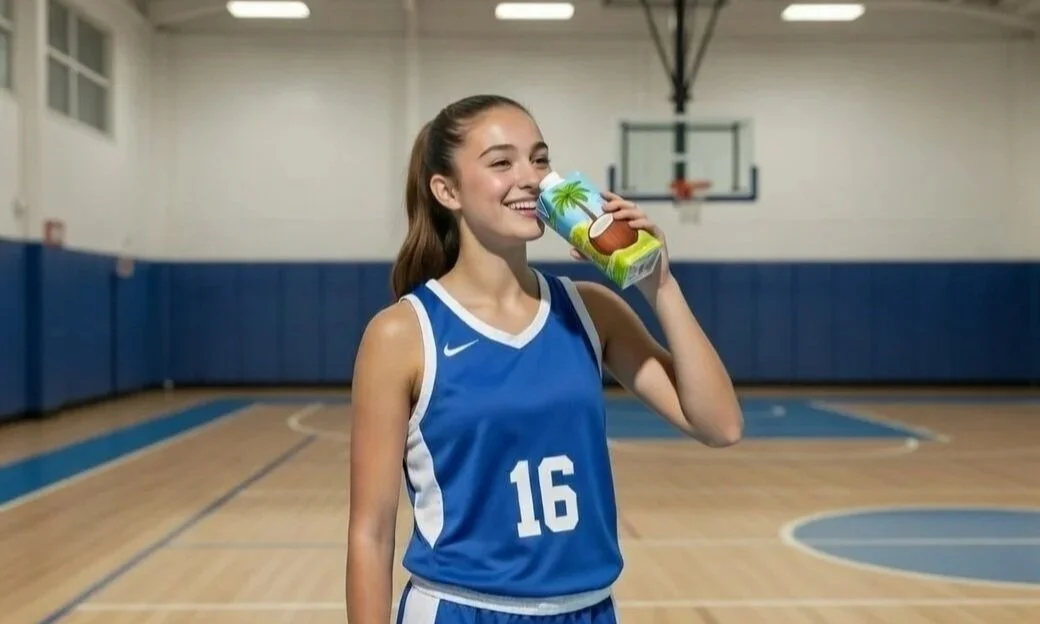
Coconut water can provide natural potassium, but athletes still need adequate sodium replacement to fully support hydration during basketball.
Magnesium
Magnesium losses in sweat are small, but many athletes and recreationally active adults are deficient.
Adding 100–200 mg magnesium glycinate may support:
Muscle relaxation
Nervous system balance
Recovery
Our daily magnesium intake should be well above this, but this is a good starting point for your mixture. Magnesium glycinate is generally well tolerated.
What About Coconut Water Electrolytes?
Coconut water is often marketed as a coconut water electrolyte drink, and it does naturally contain electrolytes — particularly potassium.
Coconut water electrolytes typically include:
Potassium (higher than most sports drinks)
Small amounts of sodium
Magnesium (minimal)
However, coconut water is relatively low in sodium compared to what is lost in sweat.
That means:
Coconut water can be a helpful base for a homemade electrolyte drink — but you still need to add salt to meaningfully replace sodium.
A balanced approach could be:
½ coconut water
½ water
Added measured sodium
This improves potassium intake while maintaining proper sodium replacement
What About Honey or Maple Syrup?
Small amounts of honey or maple syrup can:
Improve taste
Enhance sodium absorption
Provide quick carbohydrate during long sessions
This makes sense for:
Tournament weekends
Multiple games in a day
Extended training sessions
If you do this, make sure you are sipping your drink and not chugging it! Too many carbs in a small window can cause GI stress during activity.
For shorter workouts, sugar is often unnecessary. Match intake to demand.
Sample Homemade Electrolyte Drink Recipe
For 1 liter of fluid:
½ teaspoon high-quality salt (~1,000 mg sodium)
½ cup coconut water (optional, for potassium)
200-400 mg potassium (optional if not using coconut water)
100–200 mg magnesium glycinate (optional)
1–2 teaspoons honey or maple syrup (optional)
Water to fill
Adjust sodium based on sweat rate and intensity.
Hydration Is Only One Piece
Electrolytes support performance, but staying healthy in basketball requires more than hydration.
If you want a simple framework to reduce injury risk and build durable habits, download our free guide:
5 Simple Habits Every Basketball Player Should Build to Stay Injury-Free
It outlines the foundational daily habits that support long-term performance and recovery.
👉 Grab your free guide by filling out the form below.
When Homemade Works — And When It Doesn’t
A homemade electrolyte drink works well for:
Practice days
Summer training
Parents wanting ingredient control
Athletes avoiding artificial dyes and sweeteners
Hydration should replace what you lose — not just taste good.