If you’re a parent of a youth athlete or an adult who trains consistently, you’ve probably asked:
Is preworkout safe?
The honest answer is: it depends.
Pre-workout supplements can absolutely improve performance, focus, and training output under the right circumstances. But they can also create problems — especially for teenagers — if you’re not careful about ingredients, dosage, and timing.
Let’s break it down.
When Pre-Workout Can Be Safe (And Helpful)
Certain ingredients in pre-workout formulas are well-studied and effective:
Caffeine (in moderate doses)
L-citrulline
Creatine
Beta-alanine
Beetroot powder
Taurine
Used responsibly, these can:
Improve power output
Enhance focus
Increase training intensity
Support muscular endurance
For healthy adults who:
Sleep well
Hydrate properly
Use moderate doses
Choose transparent products
Pre-workout can be used safely.
But that’s not always how it’s used — especially in youth sports culture.
Caffeine: Powerful… But Easy to Overdo
Caffeine is one of the most researched ergogenic aids in sports science.
It works. But more is not better.
Many commercial pre-workouts contain 300–400+ mg of caffeine per serving. That’s the equivalent of several cups of coffee — sometimes more.
For adults, daily intake above ~400 mg increases risk of:
Anxiety
Elevated heart rate
Blood pressure spikes
Sleep disruption
Dependence and tolerance
For teenagers, it’s even more concerning.
Youth athletes:
Have smaller body mass
Have developing nervous systems
Already struggle with sleep consistency
Adding high-dose caffeine:
Increases sympathetic nervous system activation
Can interfere with sleep (especially if taken after 3 pm)
Encourages psychological reliance on stimulants for performance
And here’s the big contradiction:
If caffeine disrupts sleep, and sleep drives recovery, and recovery drives performance…
Then we may be undermining the very goal we’re chasing.
Caffeine is not inherently bad, but it must be used wisely.
We recommend this article for a deeper look at caffeine, pre-workout, and how it effects athletes.

Some pre-workout supplements contain as much caffeine as four to five cups of coffee — which can impact sleep, recovery, and nervous system balance.
Stimulants and “Sympathetic Overdrive”
Many products go beyond caffeine and include additional stimulants.
Some may be disclosed clearly. Others may be hidden inside “proprietary blends.”
Chronic high stimulant use can:
Keep the sympathetic nervous system turned on longer than necessary
Elevate stress hormones
Reduce parasympathetic recovery by decreasing your HRV (heart rate variability)
Impair deep sleep quality
Increase feelings of being “wired but tired”
For athletes — especially basketball players — recovery quality matters just as much as training intensity.
Too much adrenal drive = poorer long-term durability.
This is why many athletes begin looking for a non stim pre workout or stimulant free pre workout option instead.
Proprietary Blends: A Major Red Flag
One of the biggest concerns when asking “is preworkout safe?” is label transparency.
Some products use “proprietary blends,” meaning:
You don’t know exact ingredient amounts
You don’t know which compound is dosed high
You can’t evaluate safety or effectiveness
For youth athletes and recreational adults who care about health and longevity, this lack of transparency is a problem.
Potential issues:
Overdosed stimulants
Under-dosed performance ingredients
Hidden synthetic compounds
Greater risk of contamination
Parents especially should be cautious with products that don’t clearly disclose every ingredient and its dosage.
Sugar, Artificial Sweeteners, and Blood Sugar Spikes
Carbohydrates are not the enemy. Athletes need carbs for performance.
But there’s a difference between:
Intentional carbohydrate fueling
andExcess added sugars or artificial sweeteners in supplements.
Some pre-workouts contain:
Added sugars
Maltodextrin
Artificial sweeteners like sucralose
High sugar loads may:
Spike blood glucose rapidly
Increase energy crashes
Contribute to inflammation when used chronically
Artificial sweeteners like sucralose can:
Cause GI distress in some individuals
Potentially alter gut microbiota negatively
This is why many athletes prefer sugar free pre workout supplements — but even “sugar free” does not automatically mean healthy. Ingredient quality still matters.
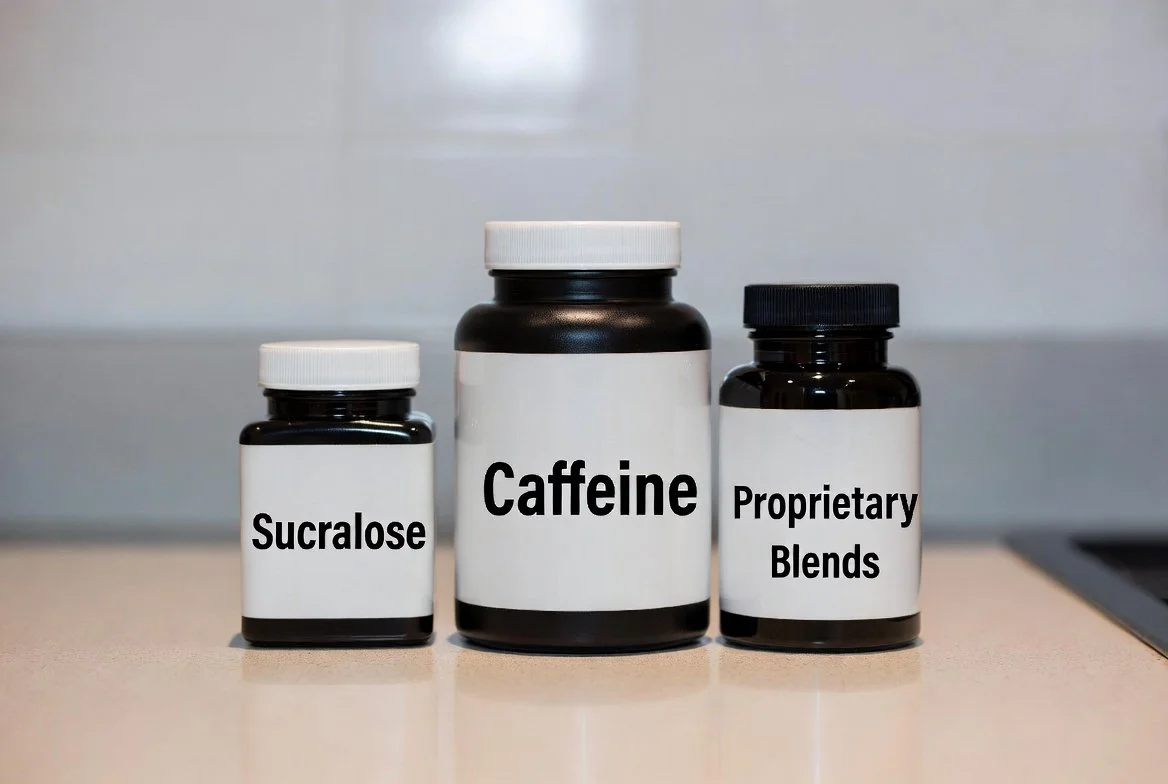
Common pre-workout ingredients that deserve caution: high-dose caffeine, artificial sweeteners like sucralose, and undisclosed proprietary blends.
Other Safety Considerations
When evaluating whether pre workout is safe, also consider:
Third-party testing
Banned substance risk for competitive athletes
Pre-existing heart conditions
Anxiety disorders
Medication interactions
Hydration status
Age
There is very little long-term safety data on heavy stimulant supplement use in adolescents.
That alone should encourage caution.
So… Is Preworkout Safe?
It can be.
For healthy adults, moderate caffeine intake, clean ingredient labels, and responsible timing can make pre-workout a helpful performance tool.
But for youth athletes — and even many adults — stimulant-heavy formulas may not be the best choice.
If you:
Train in the evenings
Struggle with sleep
Feel wired after workouts
Care about long-term recovery
Prefer natural ingredients
You may want to explore:
A caffeine free preworkout
A non stim pre workout
Or simply a properly structured warm-up and fueling strategy
Sometimes what athletes need isn’t more stimulation — it’s better preparation, better hydration, and better recovery habits.
Build Real Energy — Without Relying on Stimulants
If you want your athlete (or yourself) performing at a high level without depending on caffeine or stimulant-heavy pre-workouts, start with the foundations.
Download my free guide: “5 Simple Habits Every Basketball Player Should Build to Stay Injury-Free.”
Inside, you’ll learn how to improve preparation, recovery, and durability — so performance comes from a strong foundation, not a scoop of powder.
👇 Enter your info below to get instant access.
Final Thought for Parents and Recreational Athletes
Pre-workout is not automatically dangerous.
But it’s also not automatically safe.
Ask:
What’s in it?
How much caffeine?
Is it transparent?
Is it third-party tested?
Does it support long-term health and sleep?
Performance should never come at the expense of recovery, development, or long-term health.
And especially for youth athletes, building natural energy systems is far more powerful than borrowing energy from a scoop.
Nutrition and supplementation can play a major role in performance, but you want to make sure you are putting quality foods and products in your body. If you’re an athlete or parents of an athlete, looking for a safe yet effective pre-workout, we recommend this FoundationFuel product.