Best Warm-Up for Basketball Injury Prevention
A good warm-up is one of the simplest ways to reduce injury risk and improve performance.
Too many players skip it, rush it, or go through the motions.
A proper warm-up helps prepare your body for the demands of basketball.
That means better movement, better performance, and a lower chance of getting hurt.
What a Good Basketball Warm-Up Should Do
A strong warm-up should focus on 3 things:
1. Raise Heart Rate
Getting your heart rate up increases blood flow, raises muscle temperature, and helps deliver oxygen to working tissues.
If your game or practice starts hard and your body isn’t ready, the system has to “catch up” under stress.
This is a great spot to be creative and have variability. Some days you can mix in ball-handling and shooting drills, but other days you can practice different movement techniques.
Simple options:
Light jog
Skips
Shuffle + backpedal
Jump rope or hopping drills
Shooting drills with movement
2. Prepare Basketball Movements
Use dynamic movements that look more like sport.
Examples:
Lunges
High knees
Carioca
Lateral shuffles
Closeout steps
Deceleration drills
Low pogo hops
Single leg strength or plyos
Dynamic movement is generally better before activity than long static stretching.
If you like static stretching, do it briefly first thing, then transition into dynamic work before your game or practice starts.
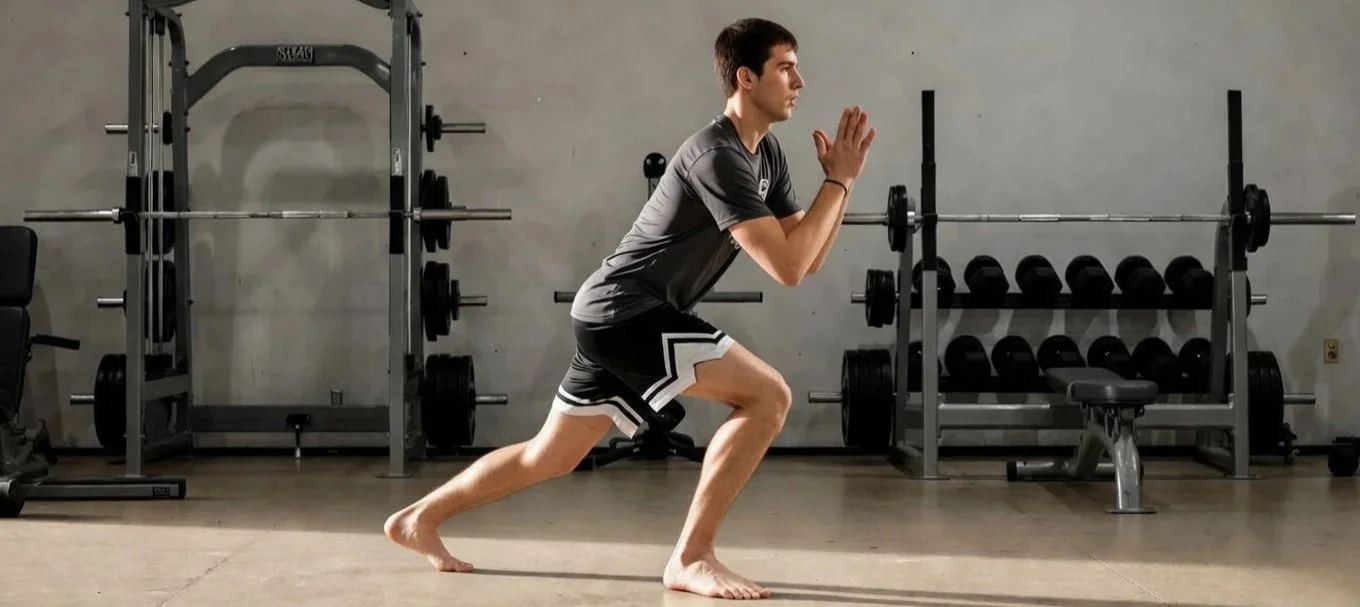
Dynamic warm-up exercises like split squat isometrics help improve tendon resiliency, activate key muscles, and reduce injury risk before basketball training.
3. Address Weak Links
This is where injury prevention lives. If you’re going to prepare your body for basketball, you might as well go ahead and prepare your weakest areas while you are at it.
Use the warm-up to target common problem areas and the spots where basketball demands the most out of you:
Ankles / Feet
Knee-to-wall ankle dorsiflexion
Calf raises
Balance and landing drills
Tendons
Spanish squat hold or wall sit
Split squat isometric
Plyometrics
Hips
90/90 hip rotations
Hip flexor mobility
Glute activation walks
Targeting these areas or other problem areas of yours will play a big role in influencing knee, ankle, foot, groin, hamstring, and low back issues.
If Something Is Sore, Spend More Time There
A sore or stiff area may need extra attention. Those are the areas more likely to turn into a real injury if they aren’t addressed.
Stay on top of those sore areas with:
More mobility
More activation
More gradual ramp-up
The Best Warm-Ups Are Individualized
Every player is different.
One athlete may need ankle mobility.
Another may need hip strength.
Another may need tendon loading.
Team warm-ups can help, but personalized warm-ups are even better.
What Research Shows
Structured warm-up programs in sport (like FIFA injury prevention models) have been shown to reduce injury rates.
Common ingredients include:
Balance work
Single-leg control
Plyometrics
Core strength
Hip/groin strength
The lesson: warm-ups should train and prepare your body, not just fill time.
Want to Reduce Injury Risk Further?
Fill out the form below our free guide: “5 Simple Habits Every Basketball Player Should Build to Stay Injury-Free”
A Simple Basketball Warm-Up Example (5–10 Minutes)
Jog with ball-handling + skips - 2 min
Dynamic mobility – 2 min
Ankle + hip work – 2 min
Pogos + landing drills – 1 min
Faster pace shooting drill - 3 min
Don’t Forget the Cool-Down
A cool-down will help start recovery much better than skipping it.
Simple options:
Light bike or walk
Easy breathing
Relaxed mobility
Gentle stretching
Tip: My favorite basketball cool-down is cycling between free-throws (or stand-still shooting), breathing drills, and mobility in my weakest areas..
This helps bring the body down instead of stopping cold.
Final Thoughts
A great warm-up doesn’t need to be long. It needs to be intentional.
It also doesn’t not need to be the same thing each day. Variability in your warm-up is a great way to prevent yourself or your players from just “going through the motions” each session.
Use this principles, apply them to yourself or your team, and create the best warm-up for your situation.
Prepare your body before basketball asks a lot from it.