Most Common Basketball Injuries (And Why They Actually Happen)
Basketball is one of the most physically demanding sports.
Players are constantly:
Jumping and landing
Cutting and changing direction
Accelerating and decelerating
Add in the fact that it’s a contact sport that favors fast-twitched individuals with a heavy endurance component as well.
That combination leads to a high injury rate, especially in the lower body.
Most injuries in basketball aren’t random. They’re predictable based on how the game stresses the body.
If you understand what injuries happen and why, you can start doing something about it.
Ankle & Foot Injuries in Basketball
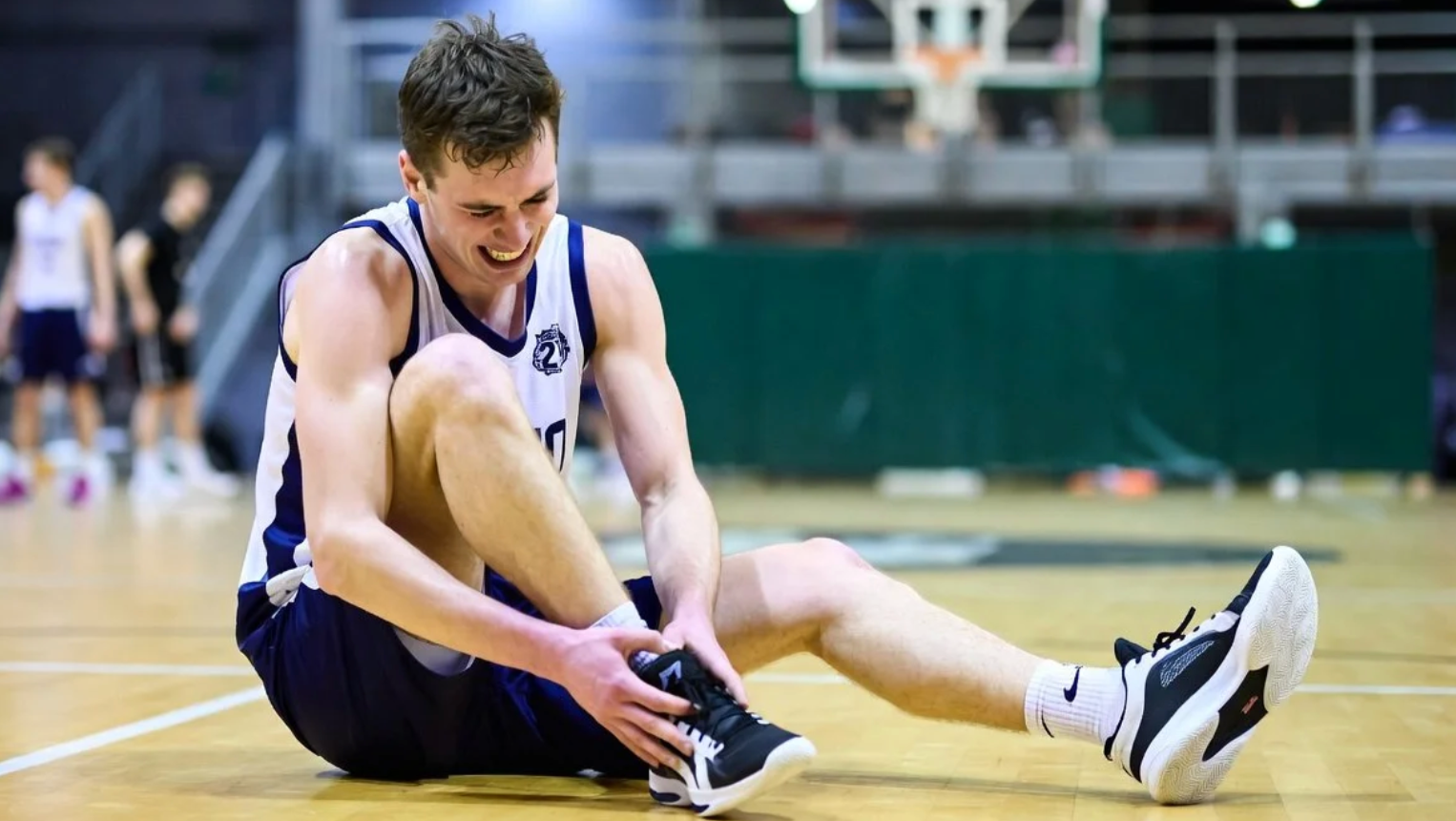
Ankle injuries are the most common injury in basketball, accounting for roughly 20–40% of all injuries.
Most common ankle/foot injuries:
Lateral ankle sprains (inversion sprains)
Most common mechanism: landing on another player’s foot, but often happens without contact as well.
Commonly injured ligaments:
Anterior talofibular ligament (ATFL)
Calcaneofibular ligament (CFL)
Achilles tendinopathy / tendonitis
Repetitive loading from jumping and sprinting
Plantar fasciitis / plantar fasciopathy
Irritation of tissue on bottom of foot from repetitive stress, unbalance loading patterns, or compensation
High ankle sprains (syndesmotic injuries)
Much less common than lateral ankle sprains but more severe
Involve ligaments between tibia and fibula (shin bones)
Ankle fractures
Occur with high force or awkward landings
Shin stress fractures can occur in an overuse fashion with imbalanced workloads
Why these happen:
Poor landing mechanics
Limited ankle, hip, or big toe mobility
Weakness or poor control in the intrinsic foot muscles or calf muscles
Fatigue or sudden workload spikes (late in games/tournaments)
Many also happen due to the nature of the game (stepping on another player’s shoe)
Previous lower body injuries leading to compensations
Knee Injuries in Basketball
Knee injuries are extremely common and often develop over time due to repeated, targeted stress.
Most common knee injuries:
Patellar tendinopathy (jumper’s knee)
Pain at the front of the knee (patellar tendon goes from the knee cap to the top of the shin)
Caused by repetitive jumping and landing
More likely to happen in players with limited ankle mobility, poor hip strength, and in workload spikes
Quadriceps tendinopathy
Similar to patellar but higher on the knee
Patellofemoral pain syndrome (PFPS)
General front-of-knee pain
Often linked to poor tracking and mechanics and limited strength/muscle activation
Osgood-Schlatter disease (youth athletes)
Growth-related stress at the tibial tuberosity
ACL injuries
Often non-contact
Occur during cutting, deceleration, or landing
Higher prevalence in female basketball players
Patellar dislocations/subluxations
More common in younger athletes
Why these happen:
Mobility limitations in the ankle, hip, and big toe
Poor load management
High jumping/landing volume
Poor landing/deceleration mechanics
Strength deficits (especially inner quads, glutes)
Muscle Injuries in Basketball
Muscle strains typically happen during high-speed or fatigued movements.
Most common muscle injuries:
Hamstring strains
Quadricep/hip flexor strains
Adductor/groin strains
Calf strains
Why these happen:
Sprinting and rapid acceleration
Sudden stopping (deceleration) or direction changes
Fatigue or sudden workload spikes (especially late in games)
Especially common during tournaments: players do not properly cool down and warm up and can be dehydrated
Overuse Injuries in Basketball
Not all injuries happen suddenly.
Besides contact injuries, most injuries actually develop over time due to movement compensations and repeated stress without enough recovery.
Common overuse issues:
Tendinopathies (patellar, Achilles, quad, hamstring)
Chronic knee pain
Foot pain (plantar fascia)
Stress reactions (early bone stress injuries)
Why these happen:
High AAU/tournament volume (workload spikes that players are not prepared for)
Year-round play without breaks
Poor recovery (sleep, nutrition)
Ignoring early warning signs
Poor training methods (weights, conditioning, skill-work)
Small aches and pains are often early warning signs—not something to push through.
Common Recreational Basketball Injuries
Adult recreational basketball players that may only play 1-2 times a week can have completely different injuries than their younger associates.
While they are still susceptible to ankle, knee, foot, tendon, and muscle injuries; here are some others that are common in adult basketball players:
Low back injuries (disc, joint, muscle, nerve)
Shoulder injuries (dislocation, instability, rotator cuff, labrum)
Neck injuries (trigger points, joint, muscle, nerve)
The Real Reason These Injuries Keep Happening
It’s not just the sport, it’s how players prepare (or don’t).
Most injuries come down to:
Your body not being prepared for the demands of basketball
Too much load, not enough physical capacity
Compensations and poor movement patterns leading to imbalanced loading
Recovery, injury prevention programs, strength & conditioning, nutrition, and other factors all play a role in physically preparing for the demands of basketball.
Basketball doesn’t create problems, but it does expose them.
What Players and Parents Should Take Away
These injuries are common—but not random
Most are predictable and preventable to a degree
The goal isn’t just to play—it’s to keep playing
The best ability is availability.
Want to Start Reducing Injury Risk?
If you want a simple, practical place to start:
👉 Download our free guide:
5 Simple Habits Every Basketball Player Should Build to Stay Injury-Free